
How to Check Criminal History in Truth or Consequences
Begin with the event, not with a broad name query. The City of Truth or Consequences routes city incident and arrest reports through its Police Department custodian. A booking creates a separate Sierra County detention record, while a filed charge creates a court case. New city ordinance matters now belong in Sierra County Magistrate Court because the city court closed. New Mexico Courts Case Lookup can reveal a docket, but its general public view does not provide the filed documents.
- Identify whether Truth or Consequences Police, the Sheriff, or New Mexico State Police handled the event.
- Ask that agency for the incident or arrest report, using a report number, date, time, and place when known.
- Call Sierra County Detention at 575-894-2537 for current custody, release, or transfer information while its roster is offline.
- Search Sierra Magistrate and Seventh Judicial District locations in New Mexico Courts Case Lookup for filed charges and outcomes.
- For a fingerprint-linked review of one's own statewide history, use the notarized NMDPS authorization process.
Each step answers a different question. A police narrative records what officers reported. Detention confirms custody. The clerk holds the official judgment. NMDPS joins qualifying fingerprint-supported arrest cycles with dispositions that agencies report.
Truth or Consequences Police Record Custodian
The Truth or Consequences municipal code assigns Police Department records to the Police Chief, with the highest-ranking senior officer serving as alternate. That local rule matters when a requester seeks a city police narrative, a call record, or arrest material. It identifies the city official responsible for records in police custody rather than sending the request to the county clerk or court clerk.
A focused request should describe the existing record with reasonable particularity. Include the incident date or range, approximate time, location, report number, and the kind of material sought. Video, audio, photographs, and written reports should be named separately. The custodian may redact personal identifiers, juvenile information, protected victim details, or material covered by a lawful investigation exception. IPRA gives access to records; it does not require the Police Department to create a new summary or answer a list of questions.
Truth or Consequences Police Department
507 McAdoo
Truth or Consequences, NM
575-894-1204
Regional dispatch after hours: 575-894-7111
The Truth or Consequences Police Department
Truth or Consequences Police is the first records stop when its officers investigated a city event. The department report can contain the alleged facts, officer observations, the stated legal basis for an arrest, named charges, and references to evidence or witnesses. Those statements reflect the investigation at that time. They are not a judgment, and charges may change after prosecutor review.
Regional dispatch is a distinct record source. A CAD entry or dispatch audio may be held by the Sierra County Regional Dispatch Authority rather than in the same file as the police narrative. When the agency is uncertain, check the citation, report receipt, or booking paperwork for the officer and department. An incident along Interstate 25 may involve New Mexico State Police, whose records follow NMDPS channels. Sending the same vague request to several offices slows the search and may miss the actual custodian.
The official city homepage provides a view of the city government that holds these local files. The official Truth or Consequences source supplied the image below.

The city source is the sound starting point for current department contacts before a request is filed.
Truth or Consequences Court Layers
Several justice offices are clustered in and around Truth or Consequences, but their files are not interchangeable. Seventh Judicial District Court handles felony and general-jurisdiction proceedings. Sierra County Magistrate Court handles limited-jurisdiction criminal cases and early felony stages. City ordinance and petty-misdemeanor matters shifted to Magistrate Court after the former municipal court closed on December 31, 2023.
The official Sierra Magistrate docket shows the current day and six future days. It is a hearing calendar, not the whole case. A missing hearing should be checked with the court. The free statewide Case Lookup can show electronic docket data such as charges, events, status, disposition, and sentence, but it excludes documents. For a certified disposition, contact the clerk that holds the case. A broader explanation of filings and certified judgments appears in the Sierra County criminal court case records.
Note: Select the Sierra court location rather than relying on how Truth or Consequences is shortened or styled in a search field.
Arrests and Bookings in Truth or Consequences
Truth or Consequences does not publish a separate long-term city jail system in the official research. A city arrest can produce a Police Department report and then a Sierra County detention intake at 311 N. Date. The detention record may show booking time, arresting agency, holding charges, bond, release, or transfer. It should not be read as the final court result.
The county detention roster was under maintenance and a security audit on the research date. Call 575-894-2537 and ask whether the person remains in Sierra County, was released, or was transferred. The county's visitation notice indicates that some people may be held elsewhere. Confirm the actual facility before sending mail or funds. A recent booking may appear before a complaint reaches the court portal, so a no-result case search immediately after arrest is not conclusive.
A complete Truth or Consequences arrest trail normally requires the city report, the booking file, the later court docket, and, for an authorized self-review, the NMDPS history. The Sierra County arrest history process gives the county-wide fallback chain without changing which agency owns the city report.
Truth or Consequences Former Court Files
The closure of Truth or Consequences Municipal Court changed where new city matters go, but it did not erase prior files. The former Municipal Court Clerk was the named custodian for those court records. A historical request may therefore begin with the city, while a current ordinance case belongs with Sierra Magistrate. Requesters should give a name, citation or case number, date, and the exact docket entry or document needed.
Online coverage has a narrow historical limit. General Case Lookup includes municipal data for criminal domestic-violence and DWI convictions beginning September 1, 1991, not every municipal matter. A blank search does not prove that an old citation or ordinance file never existed. The former court's official source illustrates the office that once held the active docket. The archived municipal court page supplied this view.
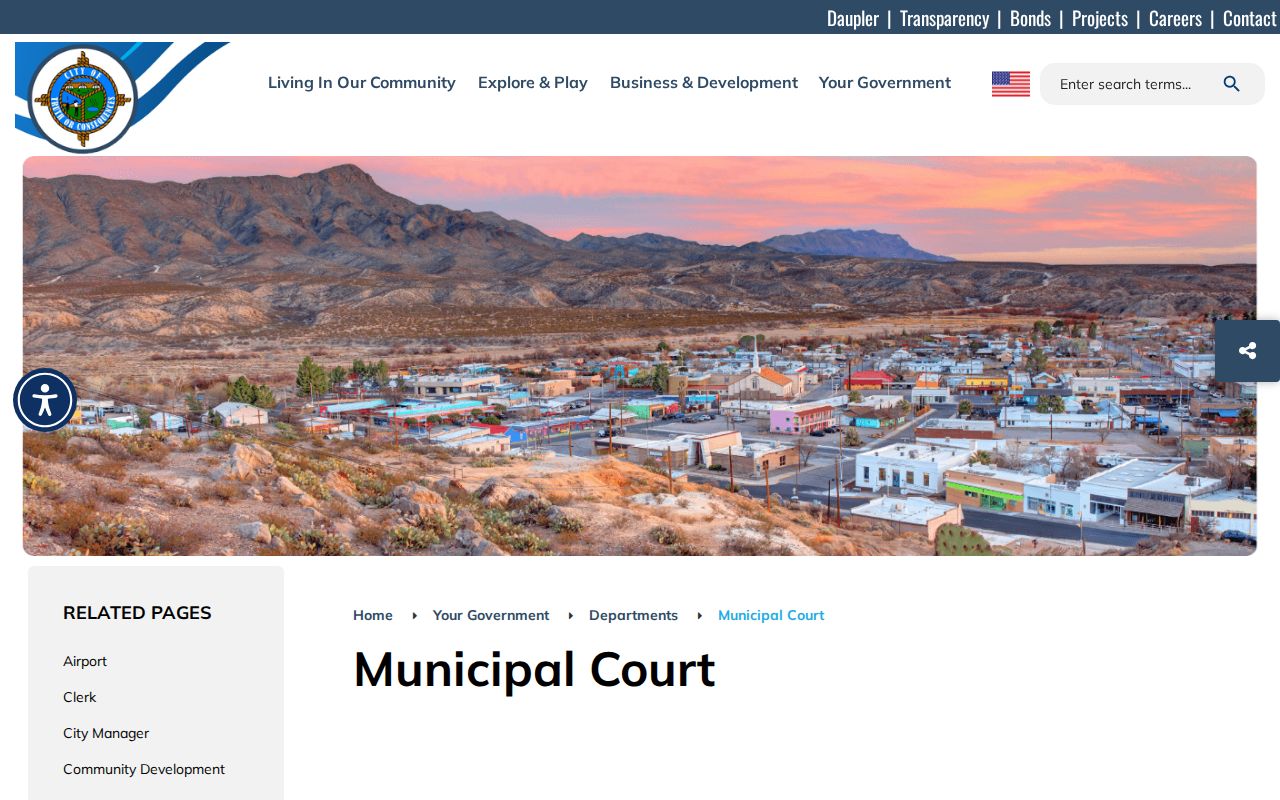
The closure makes the date of the case as important as the name when choosing a custodian.
Truth or Consequences Municipal Court Records
For new Truth or Consequences ordinance allegations, petty misdemeanors, uniform traffic matters, and city-code cases, Sierra County Magistrate Court is the current court. Ordinance 742 and New Mexico Supreme Court approval preceded the city court closure. The change was based on the city population being below 10,000 and a magistrate court being within 25 miles. Historical municipal files remain a separate records question.
| Court Name | Sierra County Magistrate Court for current city ordinance matters; former Truth or Consequences Municipal Court for appropriate historical files |
|---|---|
| Case Types Heard | City ordinances, petty misdemeanors, uniform traffic matters, and other matters within Magistrate jurisdiction |
| Case Lookup Channel | New Mexico Courts Case Lookup, Sierra Magistrate docket, and the relevant clerk |
| What the Docket Shows | Case number, court, charges, events, hearings, status, disposition, sentence, and public financial entries |
| Copies & Fees | Ask the holding clerk for current copy and certification costs; no Sierra criminal-court fee was confirmed |
Internet docket data is not the official court record. Use a certified copy when the exact disposition must be proved.
Hot Springs to Truth or Consequences Records
The city known today as Truth or Consequences was once Hot Springs. It adopted the new name in 1950 through the well-known radio-program event. That history can affect an old records search because an archive, index, or older document may use the prior city name. Use both place names when the event predates the change, while keeping the person's legal name and case date fixed.
Modern population also helps explain the compact records hub. The Census counted 6,052 residents in 2020 and estimated 5,949 in 2025, a 1.7 percent decline from the 2020 estimate base. Those figures do not measure crime. They show why the county seat can have city police, district, magistrate, detention, and county services close together while each office still retains a narrow class of files. Proximity is not shared custody.
Where Truth or Consequences Records End Up
A Truth or Consequences Police report stays with the city custodian. After an arrest, detention creates an intake file. The prosecutor decides what charge to file, and the proper court creates a docket, orders, judgment, and sentence. Fingerprints for qualifying arrests are submitted to the New Mexico State Central Repository, where reported dispositions can be tied to the arrest cycle.
Record flow: Truth or Consequences Police › Sierra County Courts › New Mexico Department of Public Safety
The newest part of the event is often at the police or detention level. The most authoritative result belongs to the court clerk. NMDPS is the statewide self-review channel, but it offers no unrestricted public name portal. Its $15 process requires an original notarized authorization and cashier's check or money order. A repository omission is not definitive because accuracy depends on agency submissions.
Truth or Consequences Sentence Compliance Records
After judgment, some local misdemeanor and DWI obligations create records outside the main docket. Sierra County's Misdemeanor Compliance Program is at 1712 N. Date, South Side, Suite E, in Truth or Consequences. It publishes forms for ignition interlock, community service, sentence-extension requests, attendance, personal-information changes, and random drug testing.
The program is not the court clerk and is not the full state probation system. The judgment and sentence remain with the court. NMCD Probation and Parole maintains state supervision data. A compliance form can document steps taken after sentencing, yet officer notes and all conditions are not automatically public. The official Misdemeanor Compliance source supplied this image.
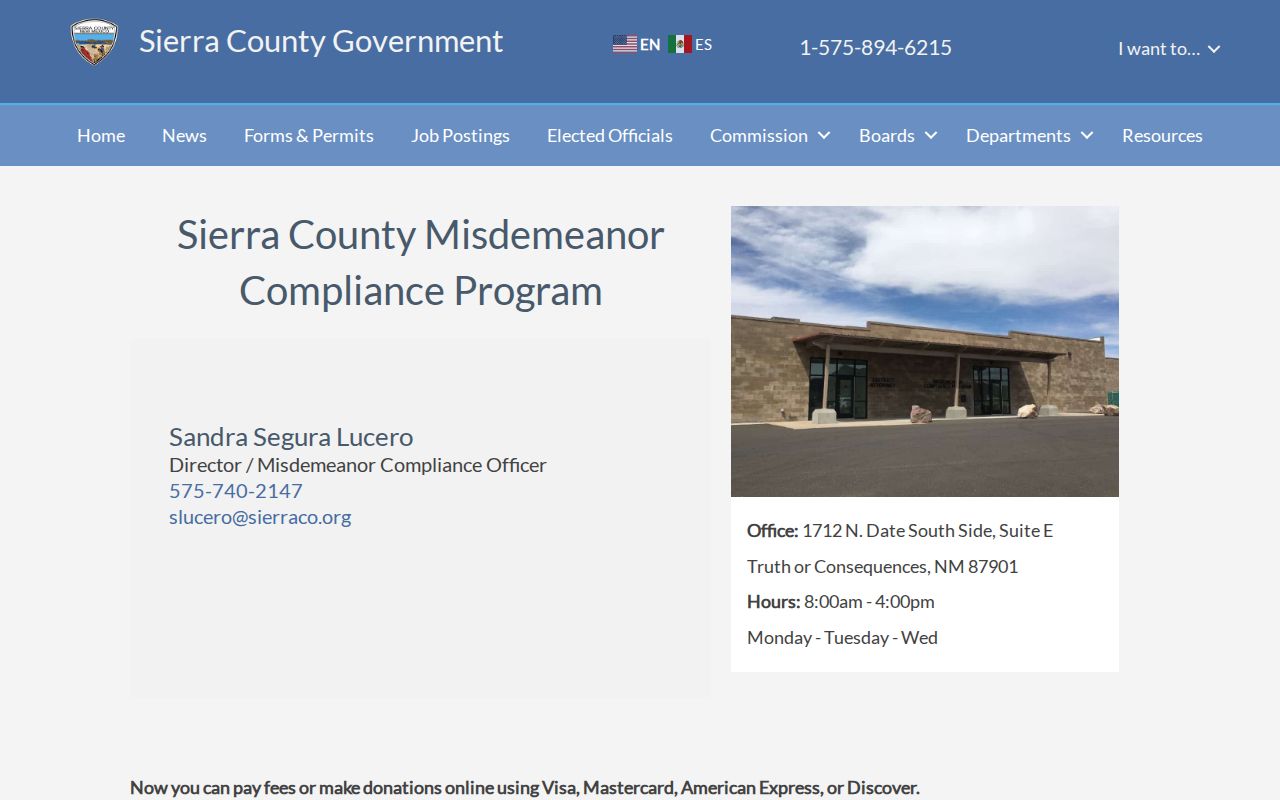
This local office helps explain why a closed case can still have ongoing compliance activity in Truth or Consequences.
Correcting Truth or Consequences Record Routes
When a Truth or Consequences request comes back with no responsive file, check the custodian before changing the search terms. City police cannot supply a Sheriff or State Police narrative. The court clerk cannot provide the Police Department's evidence file, and detention cannot certify the judicial result. Ask the first office whether another agency number or custodian appears in its records.
If the problem is a wrong or missing disposition in one's own NMDPS history, obtain the certified court outcome and identify the exact arrest cycle. Then contact NMDPS and the agency or clerk that contributed the data. That correction path is different from expungement. A correction addresses inaccurate reporting; expungement requires eligibility and a court order that restricts qualifying public records.
Public Access Rules
New Mexico law starts with the record's custodian. City police material goes to the Police Chief or alternate custodian. Court dockets and certified judgments go to the appropriate clerk. A written IPRA request must identify existing records with reasonable particularity and provide requester contact information. An agency may redact protected identifiers, juvenile information, victim data, or law-enforcement material covered by a specific exception.
Key Statutes:
Inspection of Public Records Act, §§14-2-1 through 14-2-12 NMSA 1978 makes records open unless a specific exception applies and sets the request process.
Arrest Record Information Act, §29-10-6 NMSA 1978 permits a person, counsel, or authorized agent to inspect that person's arrest information.
New Mexico Supreme Court Case Access Policy controls public docket access, protected data, and registered court-record tiers.
Criminal Record Expungement Act, §§29-3A-1 through 29-3A-7 permits qualifying records to be removed from general-public access by court order.
Public access does not turn an allegation into proof. Read the disposition, then obtain the certified judgment when the result matters.